
Randy Johnson & Paul Campion
Randy and Paul published an op-ed about their family – and serving as one of the plaintiff families in the Obergefell v. Hodges Supreme Court case – and why marriage matters in Kentucky.
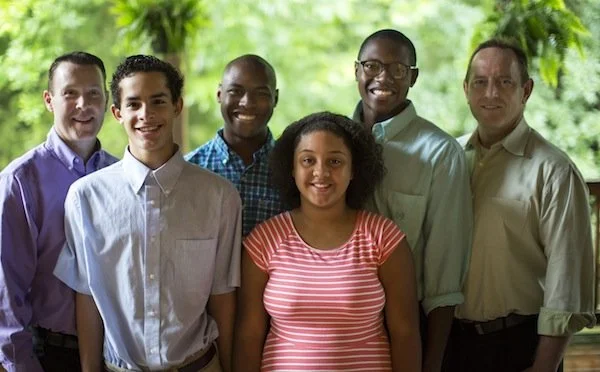
I grew up in Kentucky in a very conservative community where homosexuality was condemned. I spent roughly the first 20 years of my life convincing myself I was straight. But, one day, 34 years ago, a friend suggested I try out a bar in downtown Louisville where I could be around others like me.
I parked blocks away and hid my face walking there, so nervous that someone I knew would see me and where I was going.
But, after 15 minutes in the bar, that anguish melted away when I met the man of my dreams. I could not take my eyes off of him and, eventually, we got to talking. Paul was in town visiting his brother and I was at my first gay bar. What were the odds this would work out? We spent the entire evening in conversation, and, 34 years later, we are happily married, having raised four beautiful children together.
“ Years ago, Paul was diagnosed with cancer. It was terrifying. Wading through the paperwork was a nightmare — one only made worse because we had no legal ties to one another. We loved each other deeply, we were committed to each other — we were even raising children together — but we were nothing in the eyes of the law.”
After being rejected for our marriage license in 2013, we joined a lawsuit arguing that the Texas ban on marriage equality was unconstitutional. While being plaintiffs in DeLeon v. Perry risked our careers and certain personal relationships, we did it to ensure that other couples would not have to endure the same treatment. Throughout the case, we received threats. While this was unsettling, we also received incredible support, and we stayed committed to our cause, knowing how important the stakes were.
We did not want special treatment from the courts; we just wanted what others had: equal rights, a chance to no longer be second-class citizens, and to marry the person we loved in the state we loved. In February 2014, a federal judge ruled in our favor; however, Texas immediately appealed the decision to the Fifth Circuit, which dragged its feet, first in hearing the appeal (in January 2015), and later in issuing its decision (in June 2015, after the U.S. Supreme Court’s decision in Obergefell). During that delay, our and other Texas same-sex couples’ right to marry was on hold.
On June 26, 2015, the Supreme Court ruled in Obergefell that same-sex couples have the right to marry in all 50 states. Three months later, we officially obtained our marriage license in San Antonio, Texas, from the same county clerk who had denied us two years earlier. In November 2015, we were married in Frisco, Texas, surrounded by over 300 family and friends. It was the happiest day of our lives
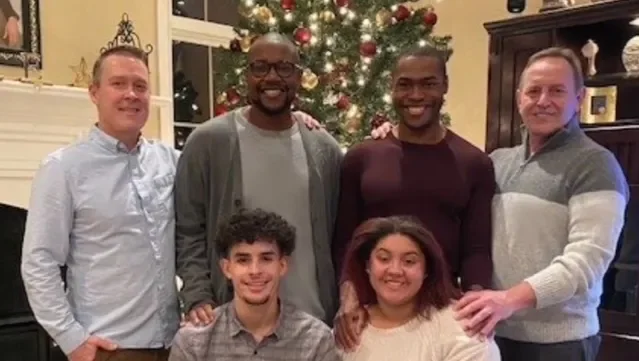
A decade later, we are happily married, still very much in love with each other, and continue to advocate for equality. Through it all, we’ve found that Texans’ hearts are bigger than Texas, and we have received support and kindness from people on both sides of the aisle.
While we celebrate the June 26th anniversary of Obergefell, our 28th anniversary together in August, and our 10th marriage anniversary in November, the fight for marriage equality in the U.S. is not over. Unfortunately, there are efforts to overturn marriage equality and upend the 775,000 same-sex marriages, including ours. But love is love. These efforts must not succeed. We need everyone to oppose these efforts whenever they arise and to support what the Supreme Court affirmed a decade ago: same-sex couples’ love and marriages are equal under the Constitution.
Mark Phariss is an in-house attorney at a Texas-based healthcare company and Vic Holmes is a retired Air Force Veteran and an associate professor teaching medicine to physician assistant students at a North Texas university.